
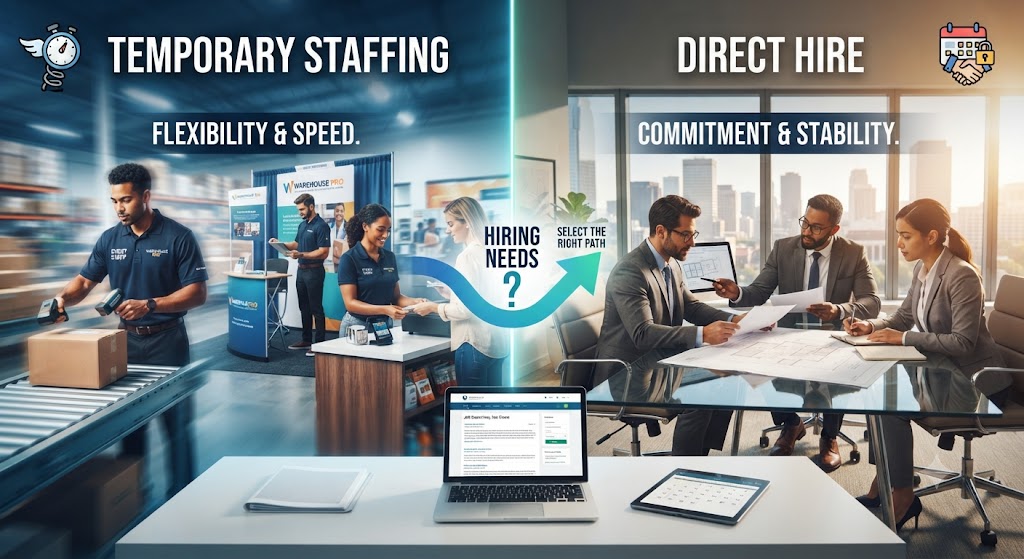
Hiring the right employees is one of the most important decisions a business can make. Whether you’re a growing startup, a manufacturing company preparing for a busy season, or an established organization looking to expand your team, the people you hire directly impact your productivity, customer satisfaction, and long-term success.
However, hiring isn’t always straightforward. Some positions require immediate support, while others call for permanent employees who can grow with the company. This is where many employers face a common question:
Should you hire temporary employees or invest in direct hires?
The answer depends on your business goals, budget, hiring timeline, and workforce needs. Both staffing solutions offer unique advantages, and understanding the differences can help you make a smarter hiring decision.
In this guide, we’ll compare temporary staffing and direct hire staffing, explain when each option makes the most sense, and help you determine which solution is best for your business.
Understanding Temporary Staffing
Temporary staffing involves hiring employees for a specific period or project. These workers are typically recruited, screened, and employed through a staffing agency, allowing businesses to quickly fill positions without managing the entire hiring process.
Temporary employees may work for a few days, several weeks, or even months depending on the company’s requirements.
Businesses often use temporary staffing for:
- Seasonal increases in workload
- Employee absences or maternity leave
- Special projects
- Short-term contracts
- Unexpected spikes in customer demand
- Testing workforce needs before making permanent hiring decisions
One of the biggest advantages of temporary staffing is flexibility. Companies can scale their workforce up or down based on business demands without making long-term employment commitments.
What Is Direct Hire Staffing?
Direct hire staffing focuses on recruiting permanent employees for full-time positions within your organization.
Unlike temporary staffing, direct hire candidates become employees of your company from day one. While a staffing agency may help identify, screen, and interview qualified candidates, the employee is hired directly by your business.
Direct hire is ideal for positions that require:
- Long-term commitment
- Specialized skills
- Leadership responsibilities
- Company culture alignment
- Career growth opportunities
Employers often choose direct hire when filling management positions, technical roles, administrative jobs, engineering positions, finance roles, or other key positions that are critical to business success.
Temporary Staffing vs. Direct Hire: The Key Differences
Choosing between temporary staffing and direct hire becomes easier when you understand how they compare across several important areas.
| Feature | Temporary Staffing | Direct Hire |
|---|---|---|
| Employment Length | Short-term | Long-term |
| Hiring Speed | Very Fast | Moderate |
| Employer Commitment | Flexible | Permanent |
| Payroll Management | Usually handled by staffing agency | Managed by employer |
| Benefits Responsibility | Often handled by staffing agency | Employer responsibility |
| Best For | Seasonal work, projects, coverage | Career positions, leadership, skilled professionals |
Both staffing models solve different business challenges. The right choice depends on your current hiring goals.
Benefits of Temporary Staffing
Temporary staffing has become increasingly popular because it allows businesses to respond quickly to changing workforce demands.
Here are some of its biggest advantages.
1. Faster Hiring Process
Open positions can cost companies time and money. Temporary staffing agencies maintain large pools of pre-screened candidates, allowing businesses to fill vacancies quickly—often within days instead of weeks.
This speed helps reduce downtime and keeps operations running smoothly.
2. Greater Workforce Flexibility
Business demands change throughout the year.
Retail stores experience holiday rushes.
Manufacturers receive large production orders.
Warehouses prepare for peak shipping seasons.
Instead of hiring permanent employees who may not be needed year-round, companies can bring in temporary workers only when demand increases.
This flexibility helps businesses stay efficient without increasing long-term labor costs.
3. Lower Recruitment Costs
Recruiting employees involves significant expenses, including:
- Job advertisements
- Resume screening
- Candidate interviews
- Background checks
- Drug testing
- Onboarding
Working with a staffing agency reduces much of this administrative burden, allowing internal HR teams to focus on strategic initiatives instead of time-consuming recruitment tasks.
4. Reduced Hiring Risk
Not every candidate turns out to be the right fit.
Temporary staffing gives employers the opportunity to evaluate a worker’s performance, attendance, skills, and cultural fit before deciding whether to offer a permanent position.
This “try-before-you-hire” approach helps reduce costly hiring mistakes.
5. Easier Payroll Administration
Many staffing agencies handle payroll processing, tax withholding, workers’ compensation, and employment paperwork for temporary employees.
This saves employers valuable time while simplifying workforce management.
When Temporary Staffing Is the Best Choice
Temporary staffing works particularly well when your business needs immediate support without making long-term hiring commitments.
It’s often the ideal solution if you need to:
- Handle seasonal demand
- Cover employee leave
- Complete short-term projects
- Fill positions quickly
- Manage unexpected increases in workload
- Evaluate candidates before making permanent hiring decisions
For industries like manufacturing, warehousing, logistics, distribution, hospitality, and customer service, temporary staffing provides the flexibility needed to keep operations running efficiently.
Benefits of Direct Hire Staffing
While temporary staffing offers flexibility, direct hire staffing is the preferred choice when you’re looking to build a strong, committed workforce for the future. Permanent employees often become valuable contributors who help drive innovation, strengthen company culture, and support long-term business growth.
Here are some of the biggest benefits of direct hire staffing.
1. Higher Employee Commitment
Permanent employees are typically more invested in the success of the company. Since they see a future with the organization, they are more likely to take ownership of their work, build strong relationships with colleagues, and contribute to long-term goals.
This commitment often leads to higher productivity and better overall performance.
2. Lower Employee Turnover
Frequent employee turnover can be expensive and disruptive. Recruiting, onboarding, and training new staff require significant time and resources.
Hiring the right permanent employees from the beginning helps create a more stable workforce, reducing turnover and improving operational efficiency.
3. Stronger Company Culture
Employees who stay with a company for years become part of its culture. They understand the organization’s values, mission, and expectations, creating a more collaborative and engaged workplace.
A strong company culture also makes it easier to attract future talent.
4. Better Long-Term Value
Although direct hire positions may require a larger upfront investment, they often provide greater long-term value through increased productivity, employee development, and reduced hiring costs over time.
Permanent employees can grow into leadership roles, mentor new team members, and contribute to continuous improvement initiatives.
5. Access to Specialized Talent
Many experienced professionals are only interested in permanent opportunities. A staffing agency can help identify highly qualified candidates who possess the technical expertise and leadership skills your business needs.
Whether you’re hiring engineers, accountants, HR professionals, administrative staff, or operations managers, direct hire staffing can connect you with top talent.
When Direct Hire Is the Better Choice
Direct hire staffing is usually the right option when your business is:
- Expanding into new markets
- Filling leadership positions
- Hiring highly skilled professionals
- Building long-term departments
- Replacing key employees
- Investing in future growth
If the position plays an important role in your company’s success, hiring a permanent employee is often the best long-term investment.
Temporary Staffing vs. Direct Hire: Cost Comparison
Many employers assume temporary staffing is always less expensive, but the reality depends on your hiring goals.
Temporary Staffing Costs
Temporary staffing generally reduces costs related to:
- Recruiting
- Advertising
- Resume screening
- Background checks
- Payroll administration
- Workers’ compensation
- Employment paperwork
Because staffing agencies handle much of the administrative work, businesses can focus on day-to-day operations.
Direct Hire Costs
Direct hire positions may involve:
- Recruitment fees
- Employee benefits
- Paid time off
- Insurance
- Retirement contributions
- Training and onboarding
However, these costs can be worthwhile when hiring employees who will contribute to your business for many years.
The best option isn’t always the least expensive—it’s the one that delivers the greatest value for your specific hiring needs.
Which Industries Benefit Most from Each Staffing Solution?
Temporary Staffing Works Best For
- Manufacturing
- Warehousing
- Distribution Centers
- Logistics
- Food Production
- Retail
- Hospitality
- Customer Service
- Event Staffing
These industries often experience seasonal demand or fluctuating workloads that require a flexible workforce.
Direct Hire Works Best For
- Engineering
- Information Technology
- Accounting & Finance
- Human Resources
- Executive Leadership
- Healthcare Administration
- Skilled Trades
- Office Administration
These roles typically require specialized expertise and long-term commitment.
Common Hiring Mistakes Businesses Should Avoid
Choosing the wrong hiring strategy can lead to unnecessary costs and productivity challenges. Here are a few common mistakes to avoid:
Hiring Permanently Too Soon
If your workload is temporary, hiring full-time employees may leave you with excess staffing once demand decreases.
Waiting Too Long to Hire
Delaying recruitment can increase overtime costs, reduce employee morale, and affect customer service.
Focusing Only on Cost
While budget is important, hiring decisions should also consider quality, experience, reliability, and long-term business goals.
Handling Recruitment Alone
Finding qualified candidates takes time. Partnering with a staffing agency gives you access to experienced recruiters, broader talent networks, and faster hiring solutions.
How to Choose the Right Staffing Solution
Ask yourself the following questions:
- Is this a temporary or permanent position?
- How quickly do I need someone to start?
- What is my hiring budget?
- Does this role require specialized skills?
- Will this position still exist six months from now?
- Do I need flexibility to scale my workforce?
Your answers will help determine whether temporary staffing, direct hire staffing, or even a combination of both is the best fit.
Many successful companies use both staffing solutions to maintain flexibility while building a strong permanent team.
Frequently Asked Questions
Is temporary staffing more affordable than direct hiring?
Temporary staffing can reduce recruitment and administrative costs, especially for short-term roles. However, direct hiring may provide better long-term value for permanent positions.
Can temporary employees become permanent?
Yes. Many businesses use a temp-to-hire approach, allowing them to evaluate a candidate’s skills and fit before extending a full-time offer.
How long does the hiring process take?
Temporary positions can often be filled within a few days, while direct hire roles typically take several weeks, depending on the position and candidate availability.
Why should I work with a staffing agency?
A staffing agency saves time by sourcing, screening, interviewing, and presenting qualified candidates. This allows employers to focus on running their business while reducing hiring risks.
Final Thoughts
There is no one-size-fits-all approach to hiring. The best staffing solution depends on your company’s goals, workforce demands, and growth plans.
If you need flexibility, rapid hiring, or seasonal support, temporary staffing can help you stay productive while controlling costs.
If you’re building a long-term team, filling specialized roles, or investing in future growth, direct hire staffing offers the stability and commitment needed for lasting success.
Many organizations find the greatest success by combining both approaches—using temporary staffing to meet immediate needs while relying on direct hire solutions for key positions.
Partner with Superior Staffing
At Superior Staffing, we understand that every business has unique hiring challenges. Whether you need dependable temporary employees, skilled direct hire candidates, or a customized workforce solution, our experienced recruiters are ready to help.
From sourcing qualified talent to simplifying the hiring process, we work closely with employers to deliver staffing solutions that support productivity, reduce hiring time, and drive long-term success.
.





Leave A Comment